How Steel Plate Supports Petrochemical and Refinery Maintenance
Refineries and petrochemical plants rely on equipment that operates under demanding conditions, often around the clock. Heat, pressure, and corrosive fluids gradually take a toll on tanks, pressure vessels, and other components. The scale of these operations is significant. According to the U.S. Energy Information Administration, U.S. refineries had approximately 18.2 million barrels per calendar day of operable crude oil distillation capacity as of January 2026.
Steel plate plays an important role in fabricating and repairing industrial equipment. It can be cut, formed, and welded to meet specific requirements. But keeping a refinery or petrochemical plant running safely involves more than replacing damaged steel. Effective petrochemical maintenance depends on understanding equipment condition as well as choosing suitable replacement materials. Here's how steel plate fits into maintenance and repair work.
Why Proper Maintenance Matters in Refineries and Petrochemical Plants
Refineries turn crude oil into usable products. Petrochemical plants use hydrocarbon feedstocks, including certain refinery products, to produce chemicals used in various industries. A plant's components, including pumps, compressors, heat exchangers, distillation columns, pipelines, and storage, are all connected. A problem in one spot can quickly affect several others. Good maintenance catches issues before they become full breakdowns. Regular inspections, lubrication, servicing, and monitoring performance limit unnecessary wear and keep equipment running within its design limits. For refinery equipment maintenance, this means using inspection findings to prioritize components that need attention.
The difference shows up most clearly when the work is planned. Planned maintenance gives crews time to inspect equipment, coordinate personnel, and prepare materials. Emergency repairs usually stop production and cost more. Clear maintenance records help too. They show how equipment is holding up and where the same problems keep coming back. This refinery maintenance information can also guide future inspections and material procurement. The same idea applies at petrochemical plants. Hazardous materials and high-pressure systems make reliable equipment especially important. The goal is simple. Keep operations safe, performance steady, and equipment lasting longer. Avoid downtime that didn’t need to happen.
What Causes Steel Equipment to Deteriorate?
Steel is durable, but exposure to chemicals, environmental conditions, and repeated mechanical loads can cause deterioration over time. Knowing the likely cause helps inspection teams figure out the damage and decide what needs a closer look.
Corrosion and Material Loss
Corrosion happens when steel reacts with its environment. Process fluids and chemicals can attack the inside of equipment. Moisture and external conditions wear on the outside. In refineries, corrosion often doesn’t hit evenly. You can get thin spots in one area while the steel right next to it still looks fine.
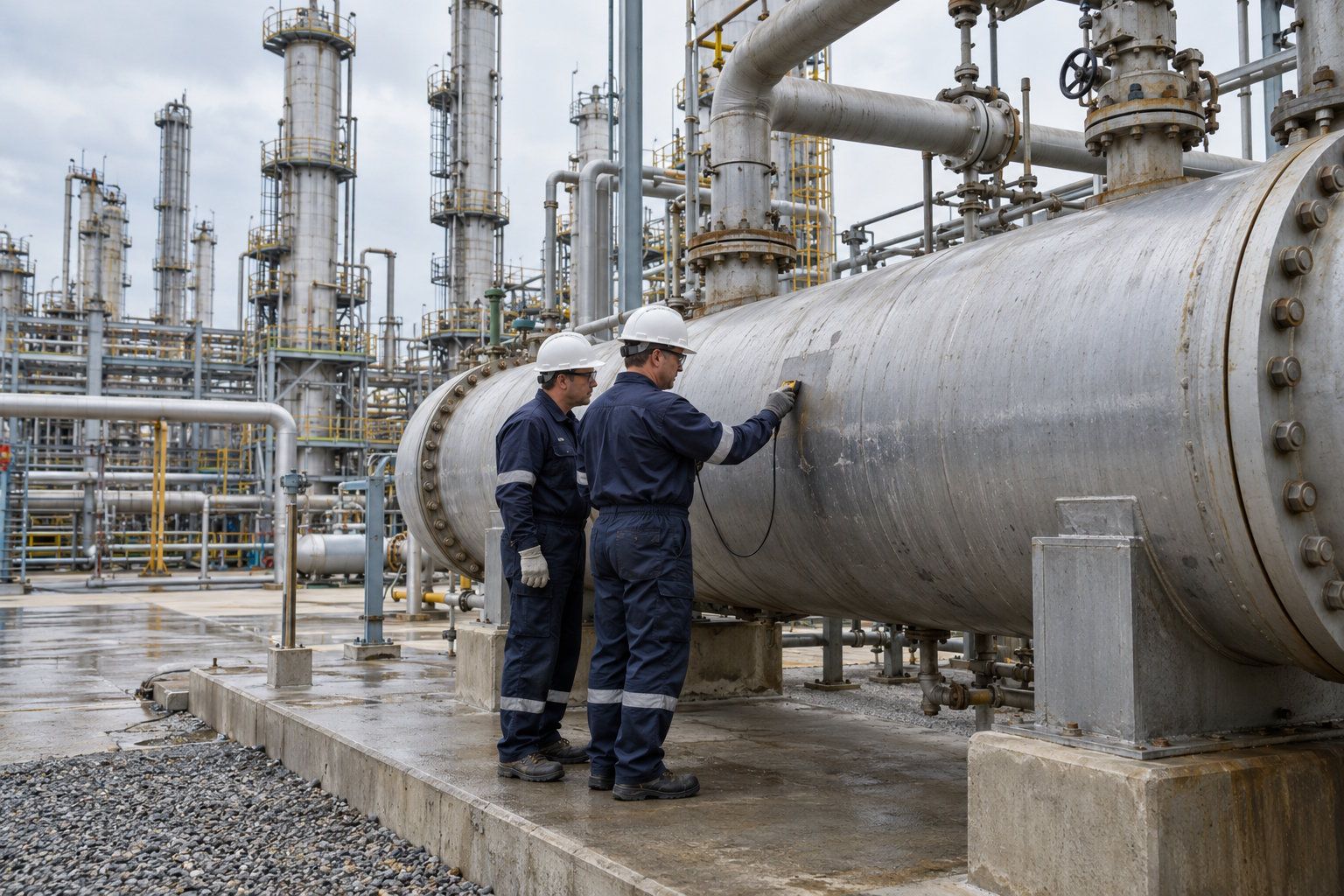
A quick visual check usually won’t tell you how much metal is left. Tracking refinery corrosion through thickness measurements helps identify localized material loss that may not be obvious from the surface. That matters on tanks, piping, and vessels that have to hold process material or stay structurally sound.
Heat, Pressure, and Mechanical Stress
Temperature cycling makes metal expand and contract as units start up, shut down, and change operating conditions. Over time, that movement can contribute to fatigue. It shows up especially at welds and nozzles where stress concentrates.
Pressure changes add more load. Repeated swings can weaken components that were designed for steadier conditions. Erosion and process wear also remove material slowly. High-velocity fluids or fluids carrying solids can thin piping and fittings. Vibration and poor alignment make it worse. Most inspection programs look for several kinds of damage at once.
Where Steel Plate Is Used in Refinery and Petrochemical Repairs
Steel plate is widely used in fabricated components throughout refinery and petrochemical facilities. Pressure vessels, storage tanks, and process equipment shells are built from plate. When sections get thin or damaged, they often need repair or replacement. Structural supports and platforms rely on plate too. These components are also part of petrochemical plant facility maintenance, where structural integrity and safe access matter. In each case, the team identifies the damaged area, confirms the service conditions, and determines whether a code-compliant repair, section replacement, or full replacement is appropriate.
Choosing Steel Plate for Refinery and Petrochemical Service
Plate selection starts with the operating environment. Temperature and pressure set the baseline for what the material has to handle. Corrosion exposure decides whether a standard grade will hold up or whether something more resistant is needed. Mechanical requirements, like strength under operating conditions, also shape the choice. In petrochemical plant maintenance, matching the plate grade to actual service conditions helps avoid unsuitable material choices.
Weldability matters. Most plate repairs involve welding. The material has to work with the welding procedure and with the base metal it’s joining. Applicable specs set minimum requirements and should guide the selection from the start. Carbon, alloy, and stainless steel plate each serve different needs. Carbon steel is a common starting point. Alloy and stainless grades get chosen when strength or corrosion resistance demands something more. Each option involves trade-offs in cost and fabrication. The final choice should match the service conditions and applicable requirements.
How Inspection and Predictive Maintenance Guide Repairs
Repairs work better when they’re based on good information. Thickness monitoring tracks remaining wall thickness at set points. That shows how fast material is being lost. Non-destructive testing (NDT) lets you examine equipment without taking it apart. Techniques such as digital radiography can reveal internal defects, while infrared thermography helps identify abnormal surface temperature patterns that may indicate equipment issues. Predictive analytics pull these data sources together. This approach supports refinery predictive maintenance by using inspection trends to inform repair priorities.
Spotting potential failure points early lets teams schedule work before a component reaches an unacceptable condition. That helps decide whether something needs repair or replacement. It also lets the work be planned instead of forced by an emergency. Periodic visual inspection still adds information that process measurements alone don’t give you. Corrosion and leaks aren’t always obvious without a close look.
Planning Major Maintenance and Refinery Turnarounds
Bigger repairs usually get coordinated during planned shutdowns. But what is a refinery turnaround? A turnaround is a scheduled period during which a unit or the entire facility is taken offline to perform inspection, maintenance, and repair work. Turnarounds give crews access to equipment that can’t be serviced while the plant is running.
Preparation has to start well before the unit goes down. Repair scope needs to be defined. Inspection requirements have to be identified. Safety planning needs to be completed. A thorough review of turnaround inspection and safety requirements covers equipment isolation, access procedures, and coordination among crews. Required steel plate should be specified and sourced in advance so it’s ready when the work starts. Aligning material orders with the refinery turnaround schedule helps ensure that the required plate is available before the shutdown.
A clear turnaround schedule keeps these activities in sequence and reduces the chance of delays once the unit is down. Planners also have to decide when major work should happen. That depends on the unit’s run length, its inspection history, and the condition of its components. Grouping repairs into a controlled window is a practical way to handle turnaround maintenance. It avoids scattering repairs across unplanned outages.
Fabrication and Quality Control for Repair Plate
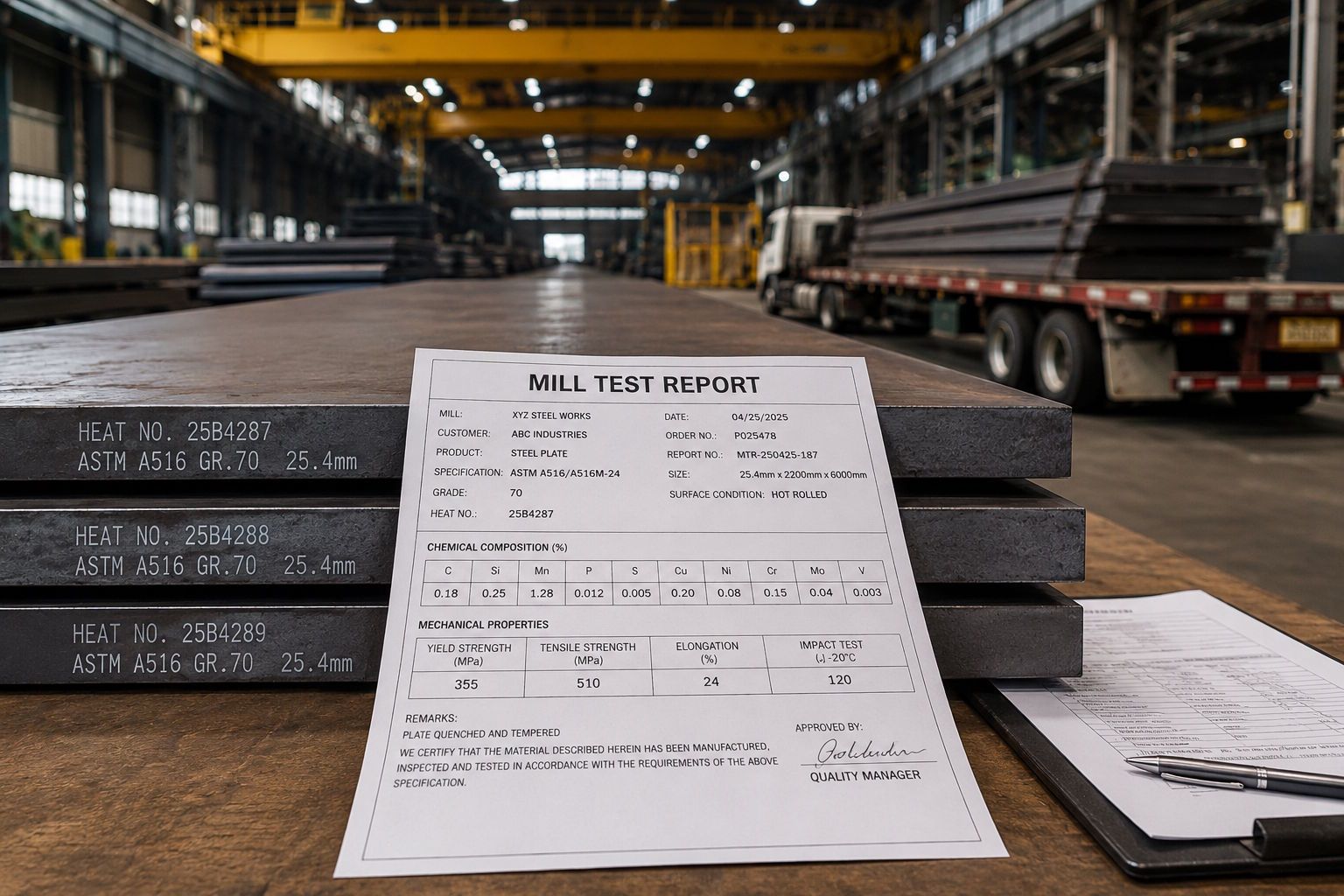
Fabrication determines whether a repair actually performs as intended. Cutting, beveling, and forming prepare the plate to fit the existing structure. Beveling creates the edge geometry needed for welding. Forming shapes the plate to match curved surfaces. Welding preparation, including cleaning and fit-up, supports sound joints. Heat treatment is applied where the specification calls for it. Material traceability links each piece of plate to its documentation so you can confirm it meets the job requirements. NDT helps identify defects in welds and plate and assess compliance with applicable acceptance criteria. Final acceptance depends on those results plus the applicable requirements. Careful documentation at each step gives owners more confidence in the repair and makes future inspections easier.
Conclusion: Maintaining Reliable Refinery and Petrochemical Equipment
Reliable operation depends on steady attention to equipment condition. Proactive maintenance catches problems early. Timely inspection shows where deterioration is happening.
The right steel plate restores the strength and containment that fabricated components need. When repairs are planned, fabricated to specification, and verified through testing, they support long-term reliability. They also help protect people, the product, and the environment.
FAQ
About the author

Chad Odom is a seasoned steel industry professional with over 20 years of experience in steel service center operations, sales, and management. Beginning his career in 2004 in warehouse operations at O’Neal Steel, he advanced into inside sales before transitioning into leadership roles, including Sales Manager at Premium Plate and Operations Manager at Total Plate. Since 2025, Chad has served as General Manager of Premium Plate, based in Mobile, Alabama. His extensive industry expertise includes steel procurement, project management, estimating, plate processing, fabrication, shop production, strategic sales, and customer relationship management. With a comprehensive understanding of the steel service center industry, from warehouse operations to executive leadership, Chad brings a hands-on, solutions-driven approach to operational efficiency, customer satisfaction, and business growth.
View all postsRecent Posts
Premium Plate Plans $20M Mobile County Facility
What Is Marine Steel Plate and How Is It Used in Vessel & Barge Repair?
Mining Equipment Maintenance: How Steel Plate Reduces Downtime
Steel Plate vs Sheet: Key Differences, Thickness, and Applications Explained