304 Stainless Steel vs 316: What Plate Buyers Should Know
Choosing between 304 vs 316 stainless steel can be daunting. You want a high-quality material that’s practical to work with and resistant to corrosion and weather exposure. Most importantly, you want to achieve all this within a budget.
For starters, knowing what is the difference between 304 and 316 stainless steel separates projects that last from those that can’t withstand the test of time. Here is a quick guide on what you need to know.
Why Stainless Grade Selection Matters for Steel Plate
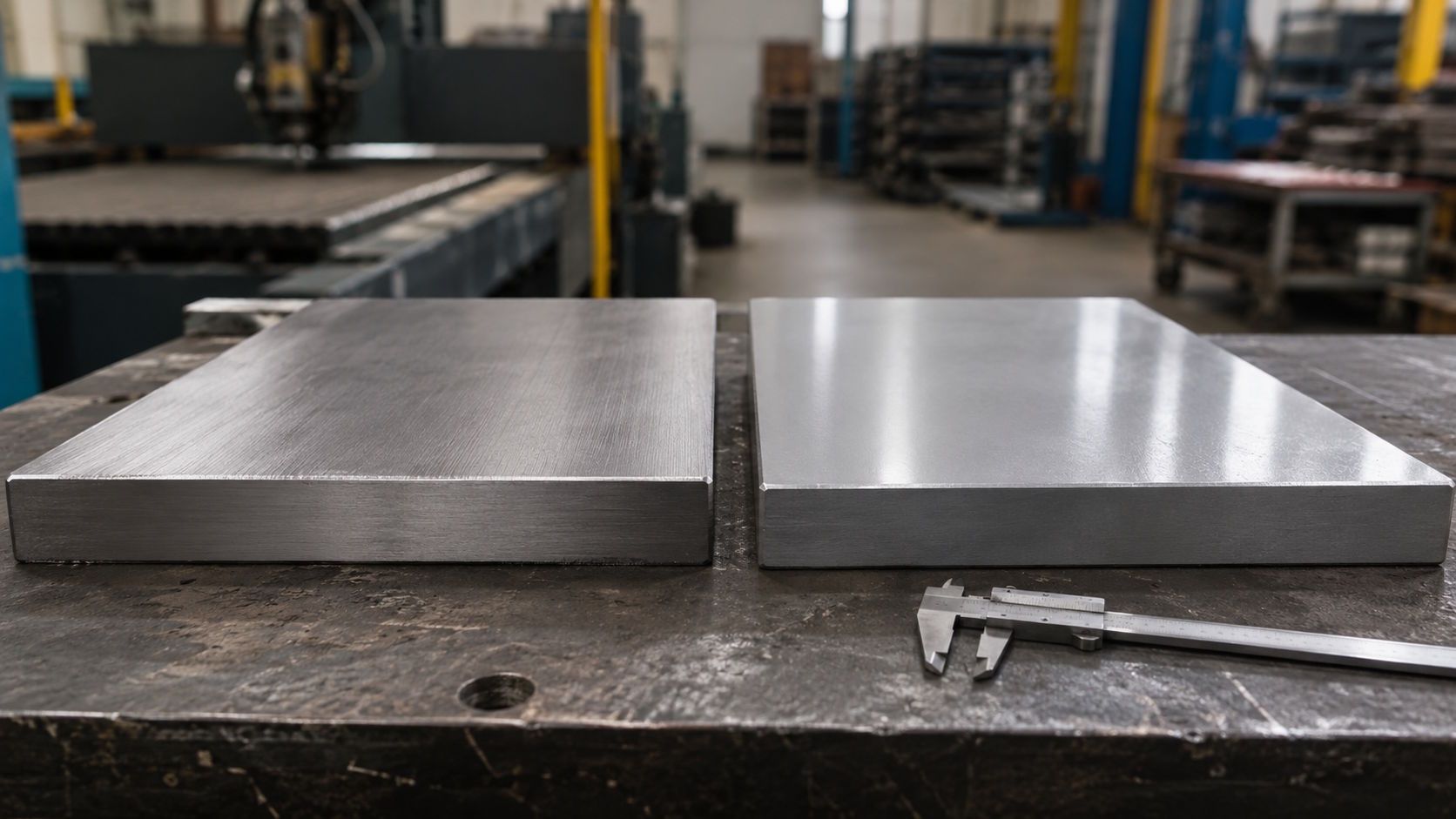
Stainless steel belongs to the larger family of alloys, and small changes in its composition can shift how it performs in real-world conditions. While 304 and 316 stainless steel may look alike, they perform differently in demanding environments.
This means choosing the wrong grade can result in unexpected maintenance costs long before you see visible corrosion. In harsh settings, the wrong choice accelerates surface degradation, staining, and wear, which drive up upkeep frequency.
The same applies to cost. A less expensive grade might work perfectly in controlled indoor conditions, while the same material struggles in coastal air or in the presence of chemical exposure.
What 304 and 316 Stainless Steel Have in Common
In practical terms, 304 and 316 stainless steel share the following characteristics:
- Non-magnetic in their standard condition
- Resistant to general corrosion in many environments
- Suitable for fabrication into plates, sheets, and formed components
- Common in food-related, architectural, and industrial applications
304 vs 316 Stainless Steel Plate: Key Differences
Now that you understand the common traits of 316 stainless vs 304, what’s the difference? They have varying:
Chemical Composition
Both 304 and 316 rely on chromium and nickel to deliver corrosion resistance and durability. That's the foundation. 304 typically runs about 18% chromium and 8% nickel. That balance is why you'll hear it called "18/8" stainless.
316 changes things up. Chromium drops a bit. Nickel goes up slightly. Then there’s the key difference: molybdenum is added at around 2–3%. That single element is what sets these grades apart when conditions get aggressive.
Corrosion Resistance
Corrosion behavior usually settles the debate when you're weighing 304 vs 316 stainless steel corrosion resistance. 304 performs well across most general environments. This includes indoor fabrication, food equipment, storage tanks, and architectural work. In these settings, it delivers years of reliable service without breaking the bank.
316, on the other hand, is built for the tough stuff. Chlorides. Saltwater. Coastal air. Chemical exposure. The molybdenum in 316 steps up resistance to pitting and localized corrosion.
Strength and Mechanical Performance
When people ask which is stronger, 304 or 316 stainless steel, the answer might surprise you.
The differences are small. Both grades offer similar tensile strength and general mechanical performance. Neither is dramatically stronger or weaker in a way that typically drives selection. In most engineering applications, they're considered comparable from a structural standpoint.
So, mechanical strength rarely determines the choice. Instead, environment and corrosion exposure carry far more weight in specifying material.
Heat and Chemical Resistance
Both grades handle elevated temperatures well. 304 is stable across a broad range of thermal conditions and is commonly used in equipment exposed to intermittent heat cycles. But when chemicals or chlorides enter the picture, performance considerations shift.
316 maintains similar heat tolerance while offering improved resistance in environments where chemicals or aggressive cleaning agents are present. That makes it more dependable in facilities where sanitation involves stronger detergents or where chemical exposure is routine.
Fabrication and Machinability
From a fabrication standpoint, 304 is generally the more straightforward material to work with. It machines and forms more easily, often resulting in lower fabrication costs and faster production times.
316 is still widely fabricated. But it tends to require more care during machining and forming. Tool wear can be higher. Processing may be slightly more demanding due to its chemical composition.
This difference is one reason 304 remains so widely used. It offers a practical balance between performance and manufacturability.
Cost Difference
Cost is usually the first thing buyers notice when comparing these grades. And it makes sense. 316 contains more nickel and includes molybdenum. Those elements aren't cheap and are tied directly to what 316 delivers. Better corrosion resistance. Better performance in aggressive environments. Longer service life in harsh conditions.
The real question is whether those benefits actually matter for your application. If they don't, paying extra for 316 doesn't make sense. 304 delivers solid, reliable performance in most general settings without the added cost. It's not about which grade is superior. It's about which one fits the job without wasting budget.
Common Applications for 304 and 316 Stainless Steel Plate
Where 304 Stainless Steel Plate Is Commonly Used
304 shows up everywhere because it covers a broad range of everyday industrial and commercial needs without introducing unnecessary material cost. It performs reliably where exposure to chlorides or aggressive chemicals is limited.
Typical uses include:
- Indoor fabrication and general structural components
- Food preparation and processing equipment
- Kitchen surfaces, appliances, and sanitary fixtures
- Storage tanks and water piping systems
- Architectural panels and decorative applications
- Automotive trim and industrial components used indoors
Where 316 Stainless Steel Plate Is Commonly Used
316 is often selected when the environment introduces conditions that 304 may not handle as well over time. The key factor is exposure. Salt, moisture, and chemicals accelerate surface attack, and that's where 316 becomes more relevant.
Common applications include:
- Marine and coastal structures
- Chemical processing equipment and piping systems
- Pharmaceutical and medical environments
- Commercial kitchens with aggressive cleaning routines
- Water-handling systems exposed to chlorides
- Industrial environments with acids, alkalis, or salts present
304 or 316 Stainless Steel: Which Should You Choose?
The decision between the two grades is rarely about strength. Both materials perform similarly from a mechanical standpoint. The real question is how the material will behave in its operating environment over time.
304 is typically the sensible choice when conditions are moderate, indoor, or not exposed to harsh chemical or salt-based environments. It offers dependable corrosion resistance at a lower cost and works across general fabrication.
316 becomes more appropriate when exposure conditions get aggressive. Saltwater, coastal air, chemical processing, or frequent contact with strong cleaning agents all increase the likelihood of corrosion in standard grades. In those cases, the higher alloy content provides a measurable advantage.
Common Mistakes When Comparing 304 and 316 Stainless Steel
Selection errors happen more often than you might expect. Typically, people focus too much on upfront cost or make assumptions about the operating environment without actually verifying conditions.
For instance, some buyers default to 316 because they assume "more corrosion resistance is always better." Sounds logical enough. But if that plate is going into a controlled indoor setting with no salt or chemical exposure, you're paying a premium for a capability you'll never use.
Then there's the opposite trap. Choosing 304 for chloride-heavy environments. Coastal installations, areas with chemical cleaning cycles, and facilities near saltwater. 304 seems fine at first glance. But give it a couple of years, and pitting starts showing up. Maintenance costs climb. Replacement comes sooner than planned. The initial savings evaporate.
Another mistake is getting hung up on mechanical strength. Walk into any shop, and you'll hear someone ask which is stronger, 304 or 316 stainless steel. But strength isn't the differentiator. Corrosion behavior is.
Conclusion: Choosing the Right Stainless Steel Plate Grade
Understanding the difference between 304 and 316 stainless steel is about matching the material to the actual conditions it will face. Get it right, and the plate does exactly what it's supposed to do. It resists the operating environment, remains manageable with routine maintenance, and delivers years of service without unexpected issues. If you are interested in exploring other material performance characteristics, check out our recent guides on Abrasion Resistant Steel Plates or Carbon vs Stainless Steel Plate.
FAQ
About the author

Chad Odom, based in Mobile, AL, US, is currently a General Manager at Premium Plate, a TF Warren Company. Chad Odom brings experience from previous roles at Total Plate Processing, a TF Warren Company and O'Neal Steel. Chad Odom holds a 2001 - 2002 University of South Alabama. With a robust skill set that includes Aluminum, Contract Negotiation, Continuous Improvement, Inventory Management, Manufacturing and more.
View all postsRecent Posts
Premium Plate Plans $20M Mobile County Facility
What Is Marine Steel Plate and How Is It Used in Vessel & Barge Repair?
Mining Equipment Maintenance: How Steel Plate Reduces Downtime
Steel Plate vs Sheet: Key Differences, Thickness, and Applications Explained