Steel Plate Supplier Evaluation Criteria: 10 Questions to Ask
Global crude steel production reached 1,848.9 million tonnes in 2025, but sourcing steel plate that meets specific project requirements can still be challenging. So what are the criteria for supplier evaluation and selection? Here is a quick guide to get you started.
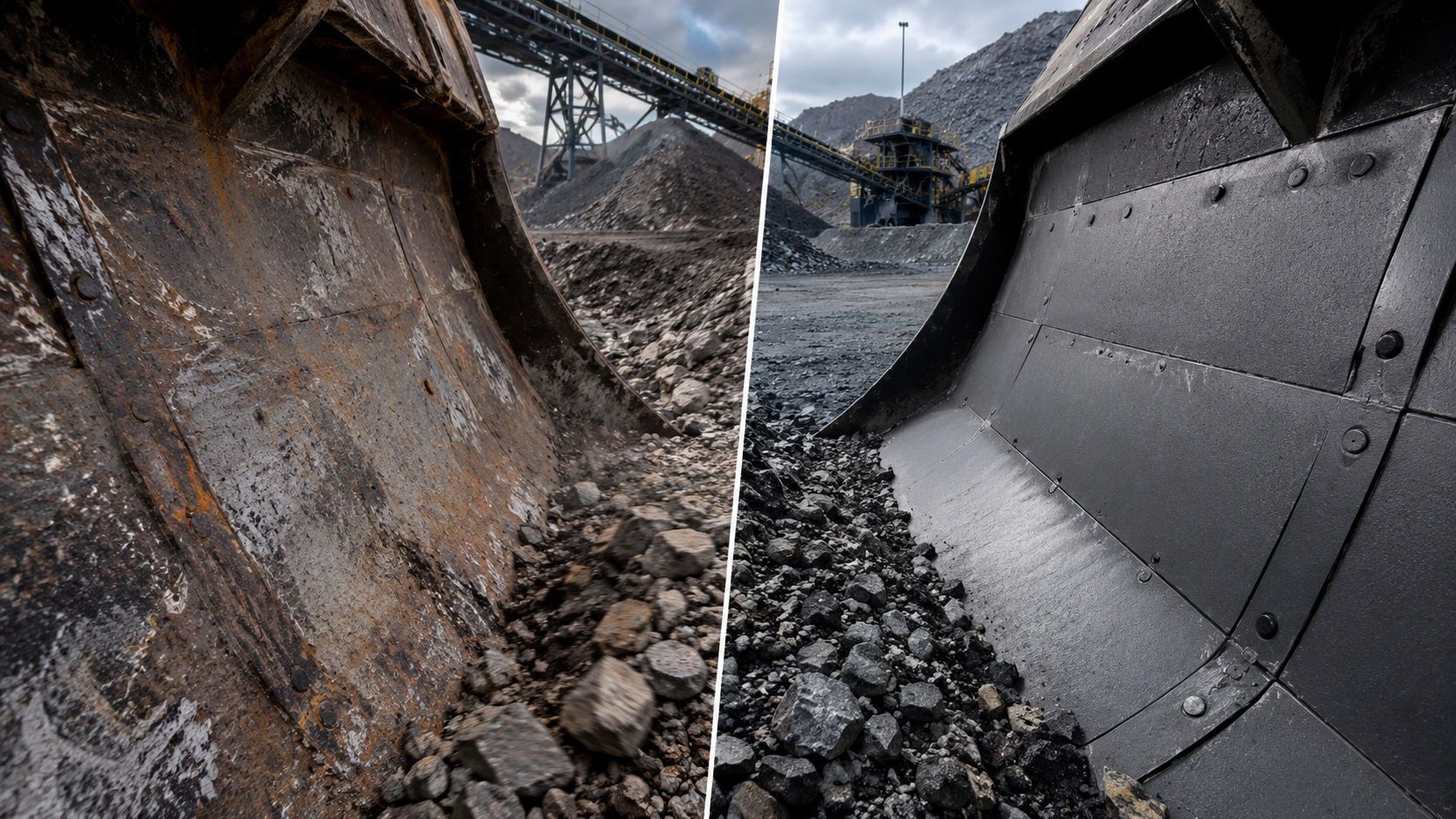
Why Steel Plate Supplier Evaluation Matters
If your construction project is going to stand the test of time, choosing a supplier based solely on price and availability won't work. Strict criteria for supplier selection are non-negotiable.
This improves the odds of finding a compliant and risk-averse supplier. Suppliers that take documentation seriously also make it easier for a project to pass inspection and stay on schedule and within budget. Most importantly, a careful evaluation gives procurement teams a fuller picture of each supplier, which makes it far easier to decide who truly fits the project’s sourcing needs.
Steel Plate Supplier Checklist: 10 Questions to Ask
Here are 10 questions that address the key supplier evaluation criteria that procurement teams need settled before an order goes out:
1. Can the Supplier Meet the Exact Steel Plate Specifications?
Jot down the grade, standard, thickness, and dimensions that your project needs. The real question is whether the supplier can deliver that exact combination or plans to swap in something close. Watch for that, because substitutions are easy to miss. Project-specific requirements, like a required test condition or a cap on a particular element, belong in writing on the order, not in someone’s memory of a phone call. Suppliers who come back with sharp clarifying questions at this stage usually have read the order closely, and that’s the kind of attention you want.
2. Is the Required Plate Actually Available?
Availability is relative. Some suppliers have materials in stock, while others must source them from a mill upon receiving an order. The first case usually results in shorter, steadier timelines. It will help if you ask what is currently in stock. Also, ask how the supplier handles a smaller run or a repeat order. If you're looking for a less common grade, ask a direct question, since a hard-to-find material can turn a routine order into a schedule problem.
3. Can the Supplier Provide Complete Material Traceability?
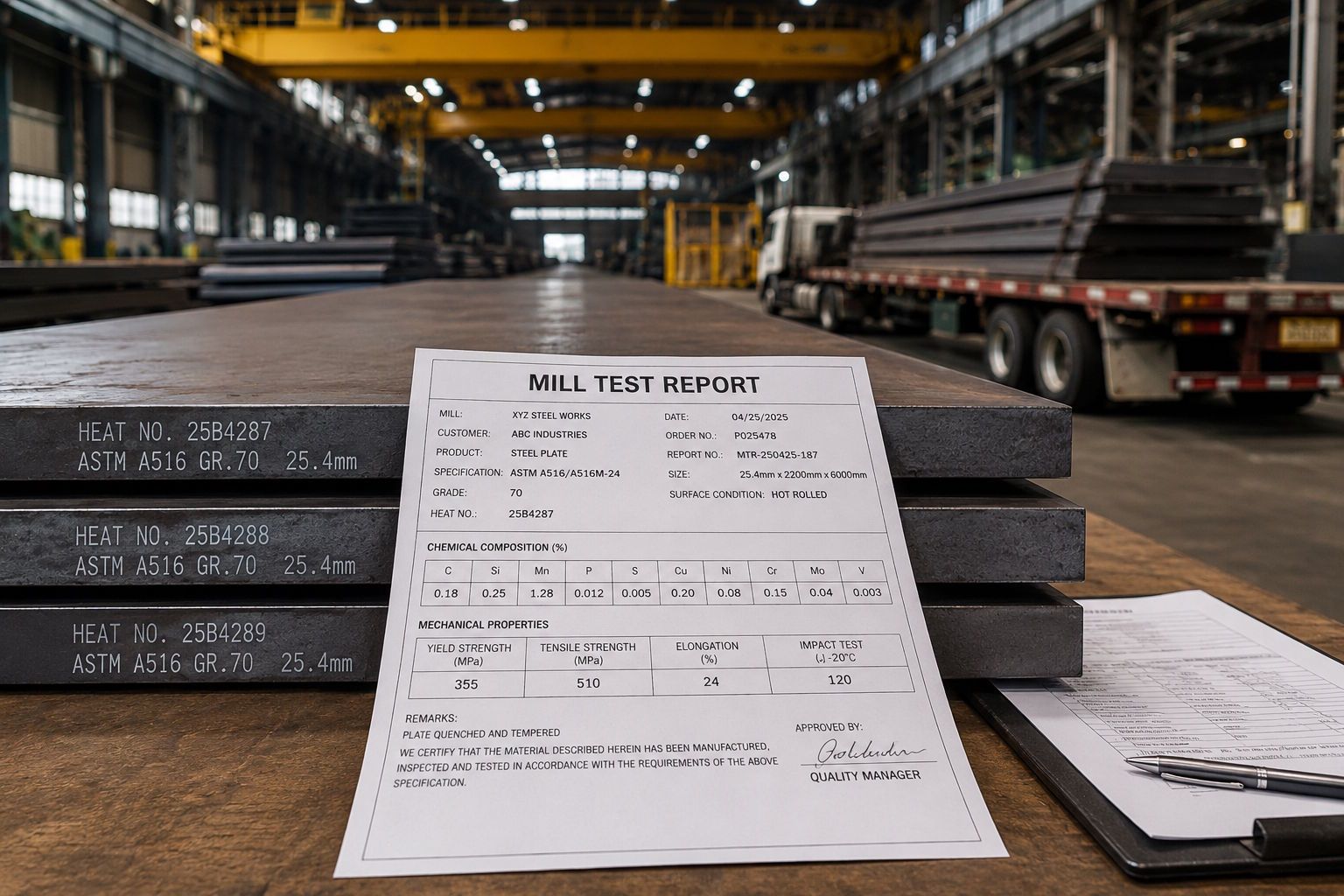
Confirm that mill test reports are available. At the same time, check the heat numbers to ensure they match the plate delivered and that the certification meets the order requirements. Ask how traceability is maintained after the plate leaves the mill, including through any cutting or processing that changes the piece. When records are complete, inspection moves quickly. When they are not, delays tend to follow.
4. Which Plate Processing Capabilities Are Performed In-House?
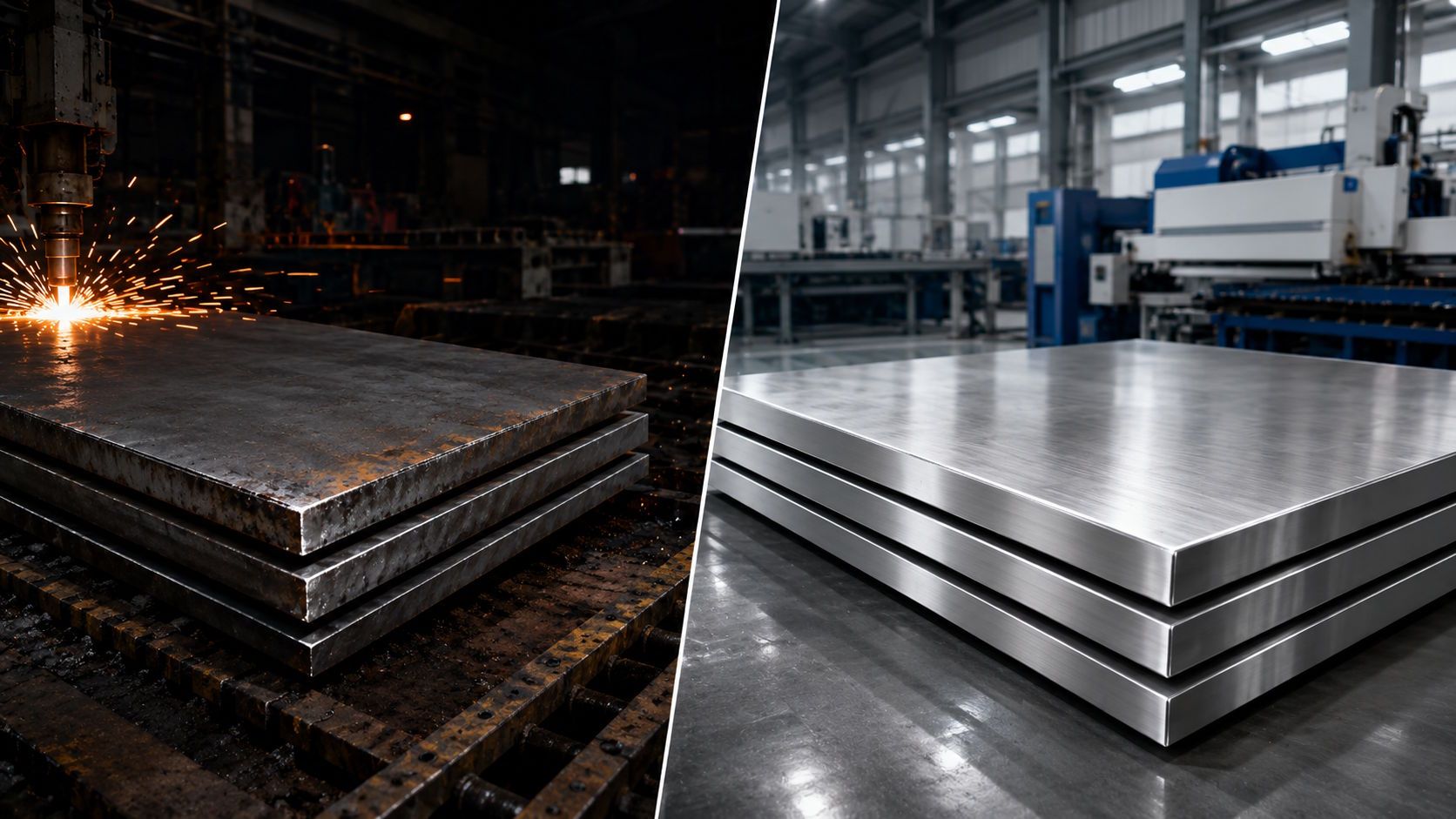
Ask which cutting and processing methods the supplier offers, including plasma cutting, beveling, rolling, forming, and surface preparation. Confirm which services are performed in-house and whether they meet the project's requirements. In-house processing can simplify coordination, reduce handling, and help maintain more predictable production schedules. Each outside vendor adds transit time and another point where something can be missed or misaligned. Clarify what is outsourced and whether the supplier can hold the tolerances the job requires.
5. How Is Quality Controlled?
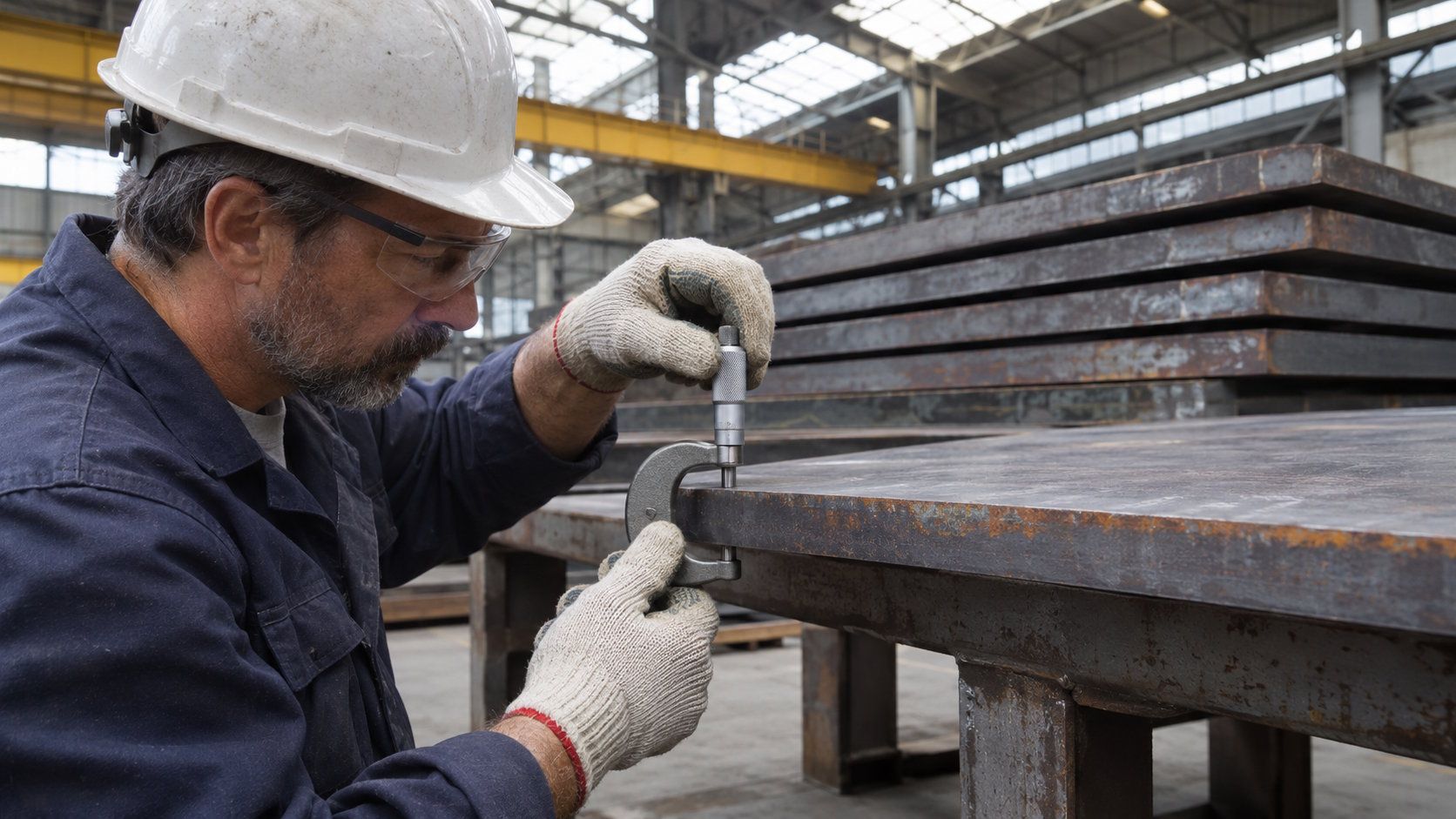
Quality certifications are a useful starting point, but the more revealing questions concern procedure. Ask what inspection steps happen before the plate ships, how dimensions are verified, and what documentation accompanies the order. Then ask how the supplier handles non-conforming material. A clear corrective action process and a willingness to explain a past failure say more than a certificate on the wall. Make sure the answer covers the full chain from receipt through final acceptance.
6. Can the Supplier Meet the Required Lead Time?
Lead time depends on production capacity, the supplier’s location, and how many outside mills or processors stand between the order and the dock. Ask for a realistic delivery date rather than the earliest one possible, and confirm how schedule changes will be communicated. Suppliers that rely on several external partners can shift timelines with little warning, so ask where each step occurs. Distance matters as well, because a remote source can use up schedule margin before the plate is even loaded.
7. How Will the Plate Be Packaged, Handled, and Delivered?
The plate can arrive in poor condition even when the correct material was supplied. Ask how the supplier protects surfaces and edges during shipment, whether coverings and secure banding are used, and how the stack is built. Stainless plate, in particular, often requires protection beyond standard freight practices. Also ask how the load will be handled during unloading, since careless movement can dent edges or scratch finishes, creating extra work before fabrication starts.
8. Does the Quote Reflect the Full Cost of the Order?
A quote’s only useful if it actually covers the whole job. This means material, processing, or any surface treatment costs. Freight, surcharges, and packaging expenses should also be added. Some quotes may exclude these additional costs. Ask about minimums. Smaller quantities often come with a premium, and shipping usually costs more the farther it has to go. Imported plates may also incur taxes that increase the final amount. Some suppliers may offer volume discounts or even cover shipping on bigger orders, so just ask instead of assuming. What matters is the total delivered cost. The number sitting at the top of the quote rarely tells the whole story.
9. What Technical Support Is Available Before Production?
The most useful technical help happens before anyone cuts the first plate. You want a supplier that will review drawings, question tolerances if something looks off, flag processing issues early, and accommodate changes to project requirements.
Catching a problem at the quoting stage is much cheaper than discovering it on the shop floor after material has already been cut. Find out who your technical contact will be, how quickly they respond to questions, and whether they understand the application well enough to confirm the processing requirements before the quote is locked in.
10. Is the Supplier Reliable Enough for Ongoing Procurement?
One good order doesn’t tell you much. What you really want to know is how they’ve performed over time. How long have they actually been working with this material? What does their real delivery history look like? Do they communicate promptly?
Ask them about consistency on repeat orders and whether they can handle more volume if your demand grows. Size isn’t the deciding factor. A smaller shop that pays attention can treat a big customer just fine. A big shop that treats you like an afterthought won’t. It comes down to the relationship. Some buyers also split volume between two suppliers, so they’ve got a backup if one supplier cannot fulfill an order.
Turning Supplier Answers Into a Procurement Scorecard
A supplier evaluation checklist provides the team with a consistent set of items, but the scoring itself requires a clear method.
It will help if you list everything that matters about the project at hand. This means material quality, availability, and delivery schedule. Whatever the case, assign those weights before you review any responses from potential suppliers. That way the scorecard reflects the project, not whichever supplier made the strongest sales pitch.
Next, score each supplier against documented evidence. A written mill test report. A current stock list. A delivery record. An example of a corrective action. Any of these carries more weight than a verbal assurance. So note the source behind each answer, and flag any claim that can't be backed up. Most importantly, keep a uniform scoring method across suppliers.
One more thing: price should appear as one weighted factor among several. Not the factor that decides the outcome by default. Teams that follow this approach tend to find the same thing; the lowest quote and the best overall supplier aren't always the same company.
Conclusion: Choosing a Steel Plate Supplier With Confidence
So, what should I consider when choosing a steel supplier? Well, start with material compliance, availability, processing capability, quality, delivery reliability, and total value. All of it matters.
Remember, a supplier offering the lowest price may not be the best choice if they can't document their material, meet delivery schedules, or hold the required tolerances. That's rarely the cheapest option once the project gets rolling. And when you find the right one, record their confirmation in writing. Then make the award based on evidence, not the first number on the page.
About the author

Chad Odom is a seasoned steel industry professional with over 20 years of experience in steel service center operations, sales, and management. Beginning his career in 2004 in warehouse operations at O’Neal Steel, he advanced into inside sales before transitioning into leadership roles, including Sales Manager at Premium Plate and Operations Manager at Total Plate. Since 2025, Chad has served as General Manager of Premium Plate, based in Mobile, Alabama. His extensive industry expertise includes steel procurement, project management, estimating, plate processing, fabrication, shop production, strategic sales, and customer relationship management. With a comprehensive understanding of the steel service center industry, from warehouse operations to executive leadership, Chad brings a hands-on, solutions-driven approach to operational efficiency, customer satisfaction, and business growth.
View all postsRecent Posts

Premium Plate’s Axis Facility Set to Open in January 2027

The Importance of Proper Refinery and Petrochemical Maintenance

Premium Plate Plans $20M Mobile County Facility
What Is Marine Steel Plate and How Is It Used in Vessel & Barge Repair?